Tuesday, 22 October 2019

Kyoto & Osaka

The day started relatively early, after a good night's rest in the hotel, near the Geisha-District (a shopping, restaurant and party/ tourist district) in the north of Kyoto, I had the usual porridge breakfast and for some good coffee, I made my way to the local Starbuck. The plan was to read for a bit and wait for my brother and his girlfriend to wake up and for all of us to get going with the day. The big plan was to meet-up with Taiga in Osaka in the afternoon. By now, pretty much everyone was scared of the Typhoon Hagibis (it's even got its own Wikipedia entry). We all realised that we were really lucky with our choice of location, being about 500km away from the main typhoon, having escaped South. Eventually, the typhoon would kill 80 people with another 11 missing (21/10/2019) and millions of damage.

Eventually, some 1.5h later my brother appeared in Starbucks and handed me a little free magazine with an interesting article on a young swordmaker called Hamawaka Sadasumi (35), who, after an 8-year apprenticeship is making Japanese swords again (link to article here).
Hamawaka Sadsumi (35), making traditional Japanese swords.
I wanna go and do a sword-making workshop.
Eventually, my brother's girlfriend arrived around 11 and we all decided to explore the Geisha district by day, which also had a huge amount of temples and shrines to visit. We braved the weather and went exploring. We stumbled into a fairly large temple (Yasaka Shrine), which hosted some private ceremony on the day and we couldn't explore the inside. However, there were many small details such as some really beautifully landscaped Japanese gardens.

Thankfully only a broken umbrella. That's the most that the typhoon affected us and of course we got a bit wet. but thankfully we chose Osaka for the day.

Yasaka Shrine

Yasaka Shrine
We went somewhere for lunch, for some reason trusting Google to tell us where to go, not always an easy feat with two vegetarians who are looking for variety and whatever is possible when it comes to finding dishes that are traditionally Japanese and with meat, such as Ramen, and finding a vegetarian alternative. After lunch, we had another coffee and decided it was time to get ourselves back down to Kyoto station, using the local bus and to make our way to Osaka, where we would meet Taiga, my friend I was hanging out with last year in Sapporo (Hokkaido). It's amazing travelling alone as you can meet so many people and you generally tend to engage in conversation with local people more as being alone all day long sometimes sucks. I met Taiga in Sapporo one evening, as we were both hanging out in Budha-bar, him travelling alone, me travelling alone. After an eventful evening, we decided that should I ever be in Osaka I'll tell him. So I did. We met Taiga at Osaka Station and whilst it was pretty rainy, it was also kind of warm. Much warmer than in Tokyo and even warmer than Kyoto just a few minutes earlier (it only took 30min  from Kyoto to Osaka by train)


Taiga showed us around the place, visiting the much-famed shopping streets and the Glico Running Man billboard. It's much famed and lots of people taking pictures there. We took some pictures but then we really went into the little alleyways of Osaka. The atmosphere was very strange, it was almost like a movie, the rain, people hushed with their umbrellas, the feeling of being on the outskirts of a mega-typhoon and then the familiarity that comes with being with someone you know and enjoy being with. Even though we've only ever met for a few hours, it felt like I've known Taigo for a long time already. We walked to a local shrine with a buddha statue that was completely over-grown with moss. Local custom is to donate the obligatory Yen 100 coin (or more) and then to sprinkle the statue with water using one of the ladles in front. No wonder the statue looked the way it does.


Taiga showed us a good time going to a local diner, where we had some sushi and some local food, before going to a corner bar that only had 5 chairs, with a strong female bar owner who was clearly boss, but also super friendly. We had a few drinks (Shoju, potato schnapps, Japanese speciality alcohol, a bit stronger than the rice-wine or Sake as it's called here). 

Eventually, we headed back to the Osaka station but not before encouraging Taiga to come visit Lonon in 2020. We were all pretty tipsy by now and the train ride was an hour as there only seemed to be local trains or we managed to miss the fast train and it looked like there were only local trains. In any case, we made it back safely to Kyoto, where we would do some proper sightseeing tomorrow.


Tuesday, 15 October 2019

Kanazawa --> Kyoto

The morning started like so many mornings, getting up, some exercise, porridge for breakfast and packing my stuff up. The plan was to check out Omicho Market, the famous fish market in Kanazawa, also called "Kanazawa's Kitchen" and operational since 1721 boasting close to 200 shops and restaurants.

Market traders were getting ready for the day, laying out their produce.
For some reason I didn't make it here back in 2009 so there was every reason not to miss in now. I left the hostel with my backpacked packed around 8.30, probably a little early for Omicho Market which tends to get active from around 10am onwards. Oh well, time for some coffee at nearby Starbucks.

I used the time to complain to the hostel management and send them some more design suggestions on improving access to their bunk beds, which is such a health & safety nightmare as it is. This made me also write to AirBnB as I feel that unsafe accommodations don't need to be accepted anymore, especially in a tightly regulated sector where taking shortcuts for pure financial gain is no longer acceptable.

Lots of fresh mushrooms of all varieties.

Crab and shrimps. Some big crab went for as much as $150!

There was also lots of fresh fruit everywhere. It was really hard not to want to buy everything.

And of course a large selection of fish of all kinds.

After a little bit of light emailing I ventured across the road. I locked my bike on the street, in the hope that other bikes left and right to mine would be a good indication that it's a designated bicycle parking area. Omicho market was literally just waking up. Many of the stall owners were busy packing their produce onto their stalls and there were no tourists yet. a few local people were already busy shopping for their own kitchens or for their restaurants. There were some whole-sellers, with unassuming looking shops and stalls and then there were more pretty-looking, well laid-out and surely tourist-focused shops and stalls. The sheer amount of fresh vegetables, fruits and of course fish was astonishing. Everything looked so tasty and the many fresh seafood dishes like grilled fish, scallops and fish oysters were really inviting. There were also a couple of restaurants from sushi to ramen to localised speciality foodstuff. I knew exactly where I was going to have lunch: its sushi time!
Waiting in line for the sushi restaurant, which operated a tight ticket system.
After lunch I stopped by Starbucks again, read some more in Ray Dalio's "Principles" and continued my note-taking. I checked the train schedule and picked a train in the next hour to continue my journey to Kyoto, some 2h by Shinkansen.

It was time to return the bike, which was a real bonus in Kanazawa. I don't think I would have been able to discover so much without it. It's also an excellent way to get lost and to randomly discover local areas a bit more than just to walk around, which can be really tiring, especially with a heavy backpack on.

I arrived at Kanazawa Station around 1pm to catch the train to Kyoto, where I would also meet with my brother and his girlfriend. It's their first time in Japan and we all decided to do a bit of sightseeing and to make the most of our 1-week Japan Railpass (£220 for 7-days of unrestricted Japan Railway travelling, including all bullet trains). The journey in the Shinkansen was much less comfortable than the one from Tokyo --> Kanazawa, mainly because the train was much older, slower and the seats were a little less comfortable. In any case, the journey passed really quickly as I continued reading some more and also had a bit of a snooze. It's so easy to coordinate things nowadays with mobile-Wifi and mobile phones. We were all to arrive in Kyoto within 30min of each other, so I'd wait and hang out near Kyoto Station.

We all went to our accommodation (private AirbBnB and hostel) in the Kawaramachi District, a shopping district and close to a lot of museums, the royal palace, Kyoto Castle and also the Gaisha District, with Edo-period streets and houses. We took a taxi from the station, something I'd never do because taxi's are usually expensive but with 3 people sharing, the headache of lugging your stuff half-way through town is not so appealing and a comfy ride ever more so.

We dumped our stuff and met up for dinner. The choice of restaurants is sheer overwhelming. From traditional Japanese Ramen, Seafood, Sushi places to Western-style restaurants. We've also been making preparations for the looming Typhoon Hagibis, the strongest typhoon to hit Japan in 60 years. Our travel planning was fortunate in that we avoided the main storm by locating ourselves 450km away from Tokyo. We were only ever to get some rain and wind but nothing compared to where the typhoon made landfall, leading to mass destruction, nearly 40 people dead and over 100 people injured.

It wasn't quite clear where the typhoon would make landfall. We were lucky we went further South, essentially avoiding all of it and just having 2 days with rain and wind. 
We spent the evening walking around the old Gaisha district with its Edo-period houses and streets before returning to our accommodation. We walked a good 3-4km that evening and decided we would visit Osaka in the morning, getting us even further away from the typhoon and also meeting top with my friend Taiga, who I'd met in Sapporo the year before. I was really excited to meet Taiga again as we had a great time in Sapporo and the invitation to come and visit if I was ever in Osaka being honoured!

The Gang

Friday, 11 October 2019

Kanazawa: Sights & Sounds

The name "Kanazawa" (金沢金澤), which literally means "marsh of gold", is said to derive from the legend of the peasant Imohori Togoro (literally "Togoro Potato-digger"), who was digging for potatoes when flakes of gold washed up (Wikipedia). The city is still responsible for most of Japan’s leaf gold, dominating the market with about 98% of it coming from Kanazawa. You can buy gold leave covered ice cream and there are special ceremonies such as New Years, where gold leaf features in some special dishes in more fancy restaurants. 
Kanazawa-Jo (Kanazawa Caste)
The city has been around as a settlement during the Muromachi Period (1336-1573) and rose as a city under Rennyo, a Buddhist priest who took control of the city during his reign (1440-1499) and established “The Peasants’ Kingdom” in the region. This eventually was overthrown by Maeda Toshiie, the founder of the Kaga Domain (also known as Kanazawa Domain). The Maeda rule lasted from about 1600 until the end of the Édo Period (1868), which was also the end of the Feudal Japan, with the abolishment of the Togukawa Shogunate. The Maeda’s ruled over the biggest part of the Togukawa Shogunate from their seat here at Kanazawa Castle. Their rule spanned an unbelievable 14 generations. Thankfully, the city was spared any bombings in WW2 so many of the streets still retained their Edo-period character with many of the original samurai houses and tea houses still in their original style and build. This makes Kanazawa an amazing city to roam around in and especially in the Higashi Chaya (Gaisha District) and Nagamachi District (Samurai District) you can almost feel what it was like here a few hundred years ago. The architecture, the roads and waterways make this an amazing city to walk around in or, ideally, to explore by bicycle :)

After a good night sleep I got up around 8am, made myself some porridge (yes, I brought porridge with me from the UK). Had some green tea and made some more for the day. The plan was to go to Kenroku-en, the famous garden in the heart of Kanazawa. Fond memories came back whenever I thought about it and my first visit 10 years ago. The main difference was in the season I visited. Back then it was April/ May when Japan is blossoming left, right and centre. This time it was very different. There are very few flowers that are blossoming in October and the leaves haven’t really started changing yet. Japan generally is best visited in Spring or Autumn to either watch the cheer and plum blossoms (and flowers generally) or in Autumn for the Koyo (Autumn Leaves). 

I left the hostel around 9 and cycled to Kenrokuen, which was a 2km cycle. I bought a ticket for both, the garden and the Kanazawa-jo (Kanazawa Castle), which is a bit cheaper than buying it separately. One of the most memorable experiences back in 2009 was the visit to the tea house inside the garden and enjoying the strong matcha (green tea) with a traditional sweet, and marvelling at the immaculate display of Ikebana (flower arranging), which is often seasonal and very expressive. 

Getting to Kenrokuen in the morning is generally sensible to avoid the crowds that descend upon it during later hours. The garden hadn’t lost any of its magic touch. The lakes and sculpted trees were ever so beautiful and walking around was very calming and relaxing. I was still comparing it to 10 years ago when the garden and it’s plum blossoms were still in bloom and various shrubs were displaying an array of blue and red flowers along the rivers and streams. 


I leisurely arrived at the tea house whiteout looking for it and almost assumed it was closed as the doors were shut and there wasn’t an “open” sign. I sat on the bench next to it to check the opening times online but couldn’t find it. Eventually I probed the front door and it was open, what a surprise. It had just gone 10am and It looked like I was one of the first people there. I took off my shoes and ordered matcha tea, which comes with a traditional sweet. I was shown to a waiting area where I left my bag before being escorted to the main tea room. To my surprise it really was empty and I had the whole place to myself. I sat down and after a while a young woman in Kimono came with my cup of matcha and a plate with the sweet on it. In the most gracious way, she knelt in front of me, carefully placing the tea and plate at my feet. She bowed before getting up again and disappearing behind a wall divider. The large tatami room had 2 flower displays on each side and in the middle opened into the tea house garden, secluded and shut off from the main Kenrokuen garden. Sitting there you can marvel at the flower displays or gaze at the garden, which opens up at the end of the room.


Tea House Garden (flower display)
The experience of enjoying a simple cup of tea with a small sweet is indescribable. The atmosphere in the tea room, the carefully arranged flowers in 4 areas of the room add to the special flavour overall. Conscientiousness, care, dedication and a highly crafted cultural awareness permeate the mind. Stillness and reflection set in. Everything is designed to be simple. The tea, the sweet and flowers. Everything works in unison to allow impressions to form in the mind. Past, present and future become one and are condensed into the present moment. Right here, right now. 

After some time, an elderly lady came to tell me that I may come and enjoy the garden by the window. This was the same as last time. I picked a spot away from the open doors, hiding to the left of the wooden terrace so that I’m case other guests come, they don’t have to see my back, but can also look out onto the garden. Already feeling quite mellow and tranquil, sitting there on the porch and looking at the sculptured trees, the stone paved path and a carefully wrapped, single stone on one of the pavement slabs provided enough stimuli, to just be. There was nothing I needed, nothing I wanted and the mind continued to be still, letting the garden impress its serene beauty upon the still and receptive mind. Occasional thoughts of impermanence and change filled me. The seasons were not only reflected in the arranged flowers, which showed the changing season in a beautiful display of red leaves, some of them eaten up by bugs. The change to Autumn and the unstoppable demise of the leaf going into winter left a big impression on me. 
Tea House Garden (stone display)
The days become weeks, the weeks become months and before you know it the year has come and gone. This life seems very precious and it’s important to do the stuff you love doing, filling it with meaning and not allowing “business as usual” or worse, with something resembling a job you don’t love and people you don’t enjoy being with, to strongly influence you. I feel very lucky to be able to come to Japan and to spend time here, away for just long enough every year to allow for the big reset button to be pushed and to continue doing what I do back in London, which is what I love doing. But combined with these strategic breaks becomes a way of life for me that brings balance and fulfilment. 

After the tea house I strolled around some more and eventually came to the end of the route through Kenrokuen. It’s been a pleasure. Again, an unforgettable experience. Next time though, for sure come and visit in spring. It’s a very different park with all the blossoms out. 

After Kenrokuen, I headed over to Kanazawa-Jo, the castle and surrounding garden. I’ve seen many castles over the years and Kanazawa castle is a really pretty and recently part-reconstructed. The ticket buys you entry to the part that’s been carefully reconstructed, showcasing how they re-built it, some treasures they found and also providing some great views over Kanazawa. 


Kanazawa-Jo (Castle)
By now my stomach told me it was time to find something to eat. Google maps provided some great suggestions for local Ramen. I found a restaurant (Ippudo Kanazawa Korinbo Restaurant), not far from the Museum of Modern Art. When in Japan, I somewhat let go of me being pescatarian as you can not avoid eating meat if you love Ramen. I usually order ramen without the pork / meat but the broth is often a meat-stock. 

Lunch was unbelievably delicious. I had ramen with extra egg and extra vegetables. The restaurant straff were super friendly and an English menu makes things much easier. 


After lunch I went to the museum of modern art, a small gem not far from Kenrokuen/ Kanazawa castle. I went to see the painting exhibition and strolled around in the museum for a good hour. Really enjoyable and a stimuli to my senses as the paintings and photographs were mind-bendingly intriguing. 
Great exhibition of modern art at the Modern Art Museum
After the museum I knew it was time! Time to hit the onsen. Already during my train ride to Kanazawa I had spotted a “super-onsen” called Mantenno yu. I know these types of onsen really well and they comprise of many baths, inside and outside, different saunas, a massage parlour and a restaurant. My back has been playing up for the last few days roaming around on foot and on the bike and a strategic back massage would do me some good. I soaked for about an hour before getting a 40min back massage. I think I actually drifted in and out of consciousness during the massage as my body was already super relaxed from the bathing and sauna. The guy seemed to know what he was doing and strategically attacked my lower back pain. 

After the massage I hit the restaurant for some soba noodles with salad and some grilled fish. Not the most spectacular food but it was ok and for just under £10 within my budget, which was slightly blown up today considering the massage (£30). I usually try and get by on less than ¥10,000 a day (£75), which doesn’t include breakfast as I’ve got my porridge with me. ¥10K gets me comfortably through the day when travelling in Japan and sight-seeing  and I often have left over money. The lunch was ¥1400, Museum ¥800, Kenrokuen and castle ¥500, Spa entrance ¥750, Massage ¥4000, spa food (dinner) ¥1300 and drinks in the bar that evening ¥1800 (3 small beers). Often, living off ¥5000/day is totally doable, especially when cycling. 

I couldn’t quite pass the opportunity to go for another soak after the massage so I went back. Having totally forgotten my towel in the hotel and not wanting time fork out another ¥250 to rent one, I had to rely on “air-drying” myself outside. This was made easy with a pool-side TV where I watched the Japan vs Russia World championship in Volleyball. After the first game Japan was in the lead and I was ready to leave the onsen. 

I headed back to the bar from yesterday called Tobira “Travellers Bar”. After spending much of the day by myself and with myself, a bit of human to human interaction in a language you actually understand is a good thing. The bar was empty when I arrived but Osugi, the owner, was again super friendly and we chatted about travelling. Eventually more guests, Japanese and Foreigners arrived and we ended up chatting about work-life balance, which is a concept people understand here but is so hard to attain. People often work long hours, have little flexibility and almost no holidays. It’s even seen as impolite to take them all...


After some drinks it was time to head back to the hostel. On the way I bought some milk for tomorrow’s breakfast. At the hostel I managed to slip off the bunk bed stairs and end up with a few scrapes on my side and elbow. They are literally the most badly designed and build stairs I’ve ever seen and unless extremely acrobatic, must lead to many falls or injustices. I took some pictures to show to hostel management as the stairs are literally the worst I’ve ever seen, anywhere. 

Despite this small annoyance, the day in Kanazawa was amazing and I will surely be back here one day. In fact, we've agreed to meet again in 2029 with Osugi-son.Lets see what happens

Thursday, 10 October 2019

Kanazawa 2019

The day began early, at 4am. Unable to go back to bed I tossed and turned for a other 2.5 hours before eventually getting up. The plan was, pack my stuff for the next 6 days and go to Tokyo to board the Shinkansen (bullet train) to Kanazawa. Take minimal clothing and food stuff so I don’t have to carry too much in my backpack.

After my usual breakfast, porridge with banana, I packed my stuff and left. I went to Kashiwa, then next biggest city to exchange my 7-day Reservation into the actual Japan Railpass. The pass allows travel across Japan including bullet trains, all inclusive. A great deal if you want to travel.


I got to Kashiwa but the station staff told me I have to go to Ueno, where the Shinkansen also departs from. By now, I was looking at the time and I wanted to really board the 10.30 train. I was cutting it fine. At Ueno I found the place to change the ticket but there was a long queue and lots of Rugby people. After all, it was also rugby world championships. 

By the time I got my rail pass I had 4 minutes to get to the Shinkansen. Which was halfway across the station, through multiple barriers and all the way 2 floors down. I also had to get my pass stamped. I ran. Missing this train would mean waiting another hour and getting to Kanazawa later than I really wanted to.

Shinkansen (Bullet Train) to Kanazawa. The line opened in 2012 and connects Tokyo, Nagano, Kanazawa.
With 30 seconds to spare I managed to literally jump into the train. Phew. What a morning. From having lots of time to just about enough. The train journey at 260km/h was pleasant and the time flew by really quickly. I managed to get through 3 big sandwichches that I made in the morning and also continued to dig into Ray Dalio’s “Principles” some more. It’s been an interesting read already, learning about how he built Bridgewater from the ground up and from his bedroom dorm to one of the most profitable hedge funds and money managers. His insistence on codifying the market, history and people and the discovery of principles that can help predict economic situations seems very intense. His big concept of idea meritocracy is still puzzling to me. It sounds interesting but also so hard to implement. In any case, the book is extremely insightful and stimulating as I get to the chapter of his “Life Principles”. 

Before long, Nagano zoomed past the train window and I still remember passing it on my journey but it took weeks to get there, not just mere hours. The train finally made its way past the Japanese Alps and I could see the big ocean appear on my window. I knew Kanazawa wasn’t far now. 

I finally arrived and it had just gone past 1pm. My hostel wasn’t far away, a 3min walk from the station, up top floors and top bunk. I felt like I had arrived. 

Picturesque Kanazawa with many old streets, dating back to Edo-period Japan.
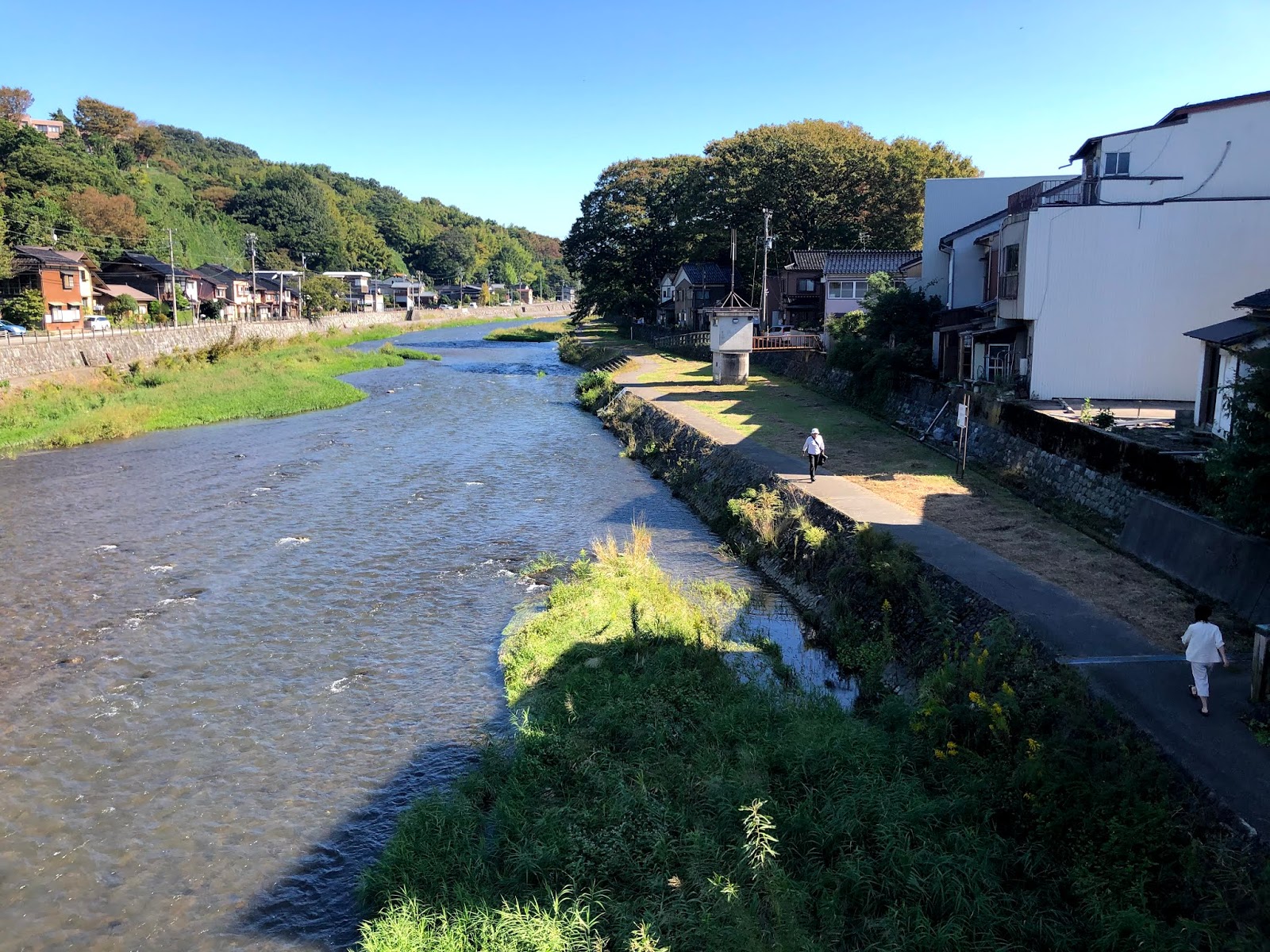
After a short reconnaissance mission, I found the nearest bike rental. I knew Kanazawa was too big to explore on foot plus I knew I would enjoy roaming around the place by bike so much more. The bike rental guy spoke English and he was surprised at my mission to find Minnorou-San, my friend from 10 years ago who had ever so hospitably welcomed me to his house as I camped nearby on the banks of the Asano River. Some days earlier I had already localised the bridge that was close to and Minnorou-san’s house, thanks to Google Streetview. I knew where to go and was excited to say hello again to Minnorou-san. Fond memories flooded my brain on the way to the river. It was a 2km cycle and shouldn’t take long. 

It is such a huge difference navigating with WiFi and Google Maps vs analogue map and compass, as I did in 2009. The city seemed much less daunting and much smaller, the distances closer and any place was easy to get to. 

This is where I met Minnorou-san in 2009, we would sit on the river bank, share food and talk about life & death.
I arrived at Minnorou-san’s house but to my detriment I found it to be a bar/ restaurant with a sign for opening times outside. Gone were the tables of souvenirs outside and gone was Minnorou-san. I didn’t want to give up so easily and parked my bike and walked along the river bank. I walked all the way to the local temple and then headed back, past my camping spot. Upon spotting an elderly lady I thought she must know where he is or what happened to him. I greeted her and asked her whether she knew where Minnorou-san is. She said she does remember him and thinks he might have moved to an apartment nearby. She said she’s got time and that I should follow her. On the road, she discovered a ¥10,000 note (£75). She seemed surprised, but then not. She said there might be more. And indeed, we walked around a bit and found another 2 ¥10,000 notes. Strange. Did she loose them? Did she know there would be more?

Minnorou-San (2009), showing off his sword skills. He was an artist and local corner-shop owner.  I later found out that he was well-known in local artist circles, though a random conversation at a bar.
We went to the little corner shop opposite Minnoeou-san’s house and the old lady talked to the shop keeper and his wife. After a short discussion of what I wanted, they told me that Minnoeou-San moved to an apartment around the corner a few years ago but that he had died last year. I had to ask again. Minnorou-san is dead? Yes, he died last year was the answer. I was shocked. Thanking both, the old lady and the shopkeepers for helping me, I left the corner shop. 

I stood outside next to my bike, next to the familiar bridge and next to Minnorou-san’s house for why must have been another 10min. Emotions flooded me and a deep sadness overcame me. With tears in my eyes I stood there and just about noticed that the new owner of the house came out and spoke to me, in good but broken English. He wanted to know why I was here. I said that I was looking for someone but that the person is no longer here. I went to the local temple, the one Minnorou-san showed me and where he instructed me to pray for journey mercies. As he did then, I now also wished him a safe journey. I still remember sitting with him by the river bank, eating sushi and drinking sake. He would tell me about his Mongolian wife and his son and that he missed them so much. On another evening he would show me his photo album of Mongolia and of his family that for some reason was there, and he in Japan. I remember his tears when he spoke about them. 

All these memories came back again and of course also those of him showing me how to use the katana, with Minorou-san showing skilfully how to use the Japanese sword, in broad daylight, next to his shop. 

And now he was gone. My mind made up a story of him having died of heartbreak and loneliness. I knew fair well that I would never know but I do know that he was lonely and that he missed his family very much. The neighbors didn’t think he was typical Japanese as he was quite extravagant and outgoing. He was such a character and his warmth and openness made Kanazawa ever so special when I was there back in 2009. 

With great sadness in my heart I left his house and went to the nearby Old-town, a historic part of Kanazawa (Higashi Chaya) with lots of old streets and famous for its tea houses and Gaisha performances. I walked around and found a little coffee shop where I sat down and reflected over coffee and a fresh apple juice.

Higashi Chaya (District)
I let my mind ponder the experiences of Kanazawa back in 2009, how I spent my evenings with Minnorou-san, how I explored the city, and how everything is so different now. I fine I thought. This is life. Ray Dalio’s “Principles” came to my mind and one principle has got to be “Life is unpredictable, make the most of it”, for we do now know when it ends. My own mortality has always been something I was acutely aware of, even from a young age. I saw people and animals around me die and was forever reminded that this current life can be tragically short and end apruptly. 

Higashi Chaya (District)
I got back onto my bike and back to the hostel. By this tome it was already late afternoon. I decided to take a nap, 40min, and then use the local onsen (hot spring) located in a nearby hotel. I knew there was a discount t voucher available from the hostel reception and as I enquires the front staff said that they ran out, but will get me one shortly. I slept quickly and deeply and woke up by my alarm. I was so ready for a soak and the overall onsen-experience. It’s one of the things I do love about Japan that you can go into any town and there will be a local bath or spa and that it’s super affordable, £1.5-£5 depending on its size and scale, comprising of hot tubs, dry and wet saunas, inside and outside pools. 

The Apa Hotel onsen was a typical hotel onsen. A couple of pools, a dry sauna but also an outdoor roof area with 3 pools. Gosh, that felt so relaxing and cleansing. I stayed on the roof top in the hot pool for some time and as I reflected on the day’s events and on death, Michael Jackson’s “You Are Not Alone”. Interesting I thought, what a timing. 

I finished bathing and headed back to the hostel and got myself ready to get some food and to roam around a bit. I knew the area for doing just that, which was a 2km bike journey. I checked on Google for some good food places and then for a joreigner-friendly bar to drown my sorrows. Just kidding. I was ok again and the day’s events were washed off, I felt. 

I cycled into downtown Kanazawa to try one of the many excellent fresh seafood places. I had some sushi, fried salt fish and a sweet potatoe and burdock bake with seasonal mushrooms. Great stuff. Afterwards I went to a local bar with foreigner friendly staff. The place was as described and there was an American guy some Japanese girls and a super friendly bar tender. We all got chatting about life here, in the US and about travelling. The bartender usually closes his bar over winter and goes travelling. He’s been to over 70 countries and spoke really good English. A few small beers later and it was time to head back and get some well deserved rest. By now I didn’t need the satnav as I memoriesed the way back. It was daily easy and just like in the afternoon, Kanazawa had shrunk. It was a much smaller city as it was back then in 2009. I blame google maps and 10 more years of experience of travelling and being around as a human being (and human doing). 

The hostel was pretty full and I could determine 3 different people snoring. Thankfully the reception had free ear plugs... good night! 

Saturday, 5 October 2019

Japan 2019 Back to the Future

This time 10 years ago, in 2009, a warm afterglow of the recent Japan trip still lingers. The magic of the trip, travelling by bike for over a 1000 miles across Japan was my first big solo adventure and the memories and experiences seem burned into my memory. Some images and scenes, forever.

I can still vividly describe the feelings, sights and sounds of the visit to Kenroku-en, one of the 8 famous Japanese National Gardens. The intimacy of the tea ceremony in the tea house, the slowness of time and the intensity of connectedness to my new adventurous self and my surroundings, never left me.

Now, 10 years later I shall return. It will be my 9th visit to Japan and I have spent over a year collectively in the land of the rising sun. So much so that I feel pretty at home wherever I go in Japan. It's not only the people that I feel close to, its the culture, the food and everything around it that I feel connected to. It's no longer alien as it was in 2009.

This year I shall return and, armed with a 1-week Japan Railpass - a travel document for tourists that allows you to take most trains on any route for 1 week, including the Shinkansen (Bullet trains) - I shall re-trace my steps back to Kanazawa, my half-way stop on my 2009 cycle trip. Here's what happened back then. I want to find Minorou-san's house and see if he's still there and well. I want to see Kenroku-en again and stroll through its beautifully landscaped gardens. It will be different, I already know. Back then I was in analog mode. I had no tech literally apart from a physical camera to take pictures. My phone stopped working back then immediately upon landing and I didn't think to buy a mobile wifi hotspot, something I do now all the time.

It was compass, map and intuition that guided me back then together with my Japan Travel Guide and the daily need to find an onsen (Thermal Spa) or ofuro (Bath house) to clean myself after a day's cycle. The adventure was real back then as I had no way of communicating with family or using the internet for anything, with the absense of Google Maps being both a curse and an opportunity and invitation to discover place and to strategically 'get lost' (some say getting lost is an interesting way to get to know your surroundings).

Let the adventure begin.

Sunday, 30 September 2018

Day 18 - 22: Sapporo II & Hakodate

My time in Sapporo just a week ago was already memorable and I was so keen to come back. The city is lively and I made new friends here thanks to Hata San, the Buddha bar owner, who dragged me into his bar from the streets as I left miserably from a nearby eatery a week again. Time to say hello again :)


Being back in Sapporo made me really happy. The connections I made from the first evening to the last, just over a week ago made this city special, bring it to life. This time i stayed in JR Inn, a Japanese Railway operated budget hotel. It was close to the station which is why I needed, having to staff all my stuff and bike back to the station or pack everything there. Either way, i picked it and it was a great choice. A modern budget hotel with only shower facilities but a public bath and great common area with free drinks in the basement. I was probably their best customer at both, reading 2 bios there, one on Japanese gardens and one on Onsens. Both were really interesting as i really like these 2 features of Japan. The garden book gave me some inspiration on which garden to visit in Tokyo and the onsen book was just generally interesting to see how this culture of public bathing has evolved. It seems that nowadays it’s sill somewhat popular but in so cities may be dying out as most people now have baths in their homes.
This isn’t a day-to-day account as such as I officially stopped cycling but more of a diary entry. My bike remained parked near the hotel until the very fateful evening when Sapporo decided to pound my bike for having parked it apparently in a bad location (where also so many other bikes parked). This was on Friday to Saturday night. With the bike pound only open during weekdays I had little choice but to sadly say goodbye to it mentally and to arrange for a new owner for it. My selection process was pretty simple. Ask someone at Buddha bar. The bike was already 3 years old, in need of service (rear wheel spike and alignment), but maybe also a total rear wheel replacement as some spokes cannot be tightened any further and it also should need a rear cassette and chain upgrade as they were heavily used by now. Overall though I’d imagine the bike was still worth £150-£250, especially considering the great tyres (£80), good saddle, and overall being a solid bike. It’s a great gift so I would just make someone happy with it. Eventually I gave the keys to Max, one of the bar staff at Buddha bar. He’s got to free it from the bike pound, get it fixed up a little. He was very happy and so was I


During the days in Sapporo I did a lot of touristy stuff like taking the cable car to mount Moiwa, a mountain that towers over the city with its famous Hokkaido Shrine and view over the city generally. To do so I had to take the cable car, which does a loop around the city. It’s pretty inexpensive and a great way around for ¥200 (£2). I also checked out the subway, which isn’t just a subway but another city underground. As it gets pretty cold in winter, it seemed that you can easily walk to and from many places simply underground, with shops and food places abound or just take the underground to get around town. 


I used the onsen facility in the hotel at least 2 times a day sometimes even 3. My toes were still numb, even after 2 days of rest but getting better. My things and lower back was still hurting but also getting better. I do wonder, I’ve spent 3 weeks in barefoot shoes (Vivo Trail II), which literally have no cushioning. It took some time to get used to barefoot shoes generally, which I stayed to wear 6 months ago but I’d not spend entire days or weeks in them. Not sure if being solely on concrete and on uncushioned shoes is good/ bad or just a matter of getting used to them. 


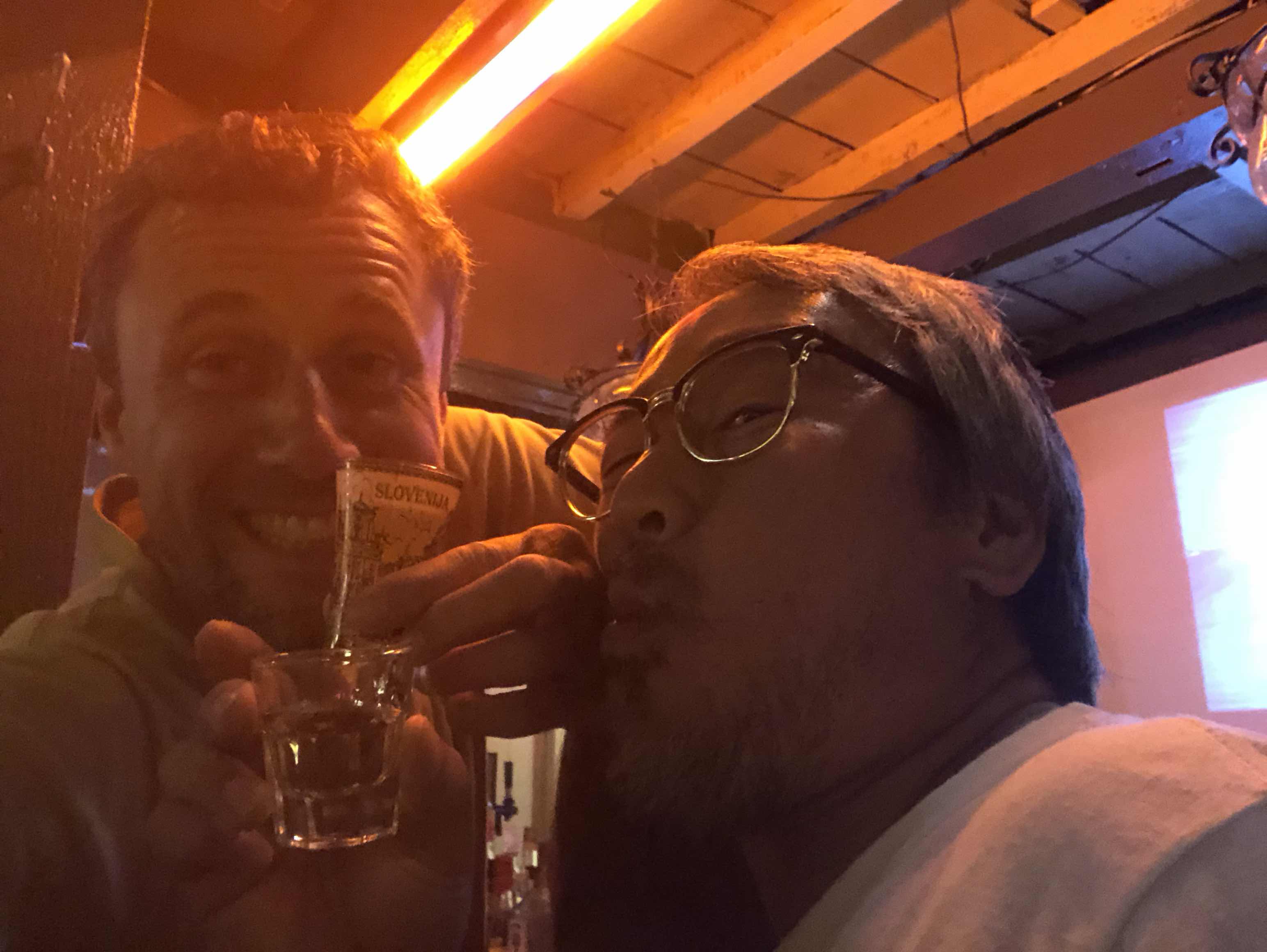
Discovering Sapporo second time around was just as much fun. Now that I knew a few people here and having a “place to hang out”(Buddha bar), it’s made everything so much more enjoyable. I’ve discovered a great sushi place where I would either have lunch or dinner and I’d have 2 coffees a day usually in Starbucks to either write some notes/ Blog, do a little bit of work or just chill out. The evenings at Buddha Bar were always different, new people, stranded tourists both local or foreign were always up for a chat. I met some cool people from Osaka, Italy and Sapporo alike. We partied a little with the owner and bar staff and rounds went both ways, either the owner gave some or punters. One evening, having met a recent arrival from Osaka named Taiga, and a guy from Italy and his local girlfriend, we went out for karaoke in a tiny place and later went to a club. Gosh, I must have been the oldest person in there and the music, albeit electronic (yeh), was  super annoying and “hyped”, targeting a much younger, maybe less mature audience. Maybe it was the style here but the nightclub didn’t see us for long as we ran out an hour later all pretty tipsy by now. 
The next day it was time to leave Sapporo and to go to Hakodate, from where I’d take the Shinkansen back down to Tokyo. There is a direct train connecting Sapporo and Hakodate BT it takes 4h and isnt particularly fast. It was ok for me. I just had to ran to Buddha bar, give my key for the bike to whoever I could find, have a last coffee at Starbucks and go to Sapporo Station, where I had already bought my train tickets he day before. I reduced my luggage by one bag with better packing and having lost some of my stuff anyway, less clothes, less food. It was still a big travelling bag, one of my bike bags and a big backpack. It was heavy and annoying to carry and I was imagining also carrying my bike at that point. I’m a way I was ok having left it as it would have been such a pain to carry it around. 


The journey to Hakodate was smooth but long, I dozed off for a bit but also enjoyed the travel past mountains and along the coast. I was extremely miserable though. This marked the end of my 3 weeks vacation, the journey back. 

Hakodate I


I arrived in Hakodate around 2, checked into my extreme budget hotel right opposite the station and tried to figure out what to do. I was still very sad and wasn’t sure what was going to make this feeling go away. I didn’t bother unpacking, took my WiFi device, phone, wallet and ran out of the hotel. One of the tourist destinations is the castle but it was 3.2lm away and I felt in no shape to walk there and it was getting dark in an hour. I made it 300m before discovering (google maps) that this was the place where the last samurai died. The last samurai (Hijikata Toshizō) fighting for the Tokugawa shogunate, tragically died here in Hakodate. Not without a fight. His death and the battle of Hakodate (函館戦争) took Japan into the Meiji area. 


Finally, by 1872, the daimyōs (feudal lords), past and present, were summoned before the Emperor, where it was declared that all domains were now to be returned to the Emperor. All complied and were given a strong voice in a now united Japan. This also accelerated the growth of Japan as an industrialised nation (...Thanks Wikipedia). 

I saw the small shrine that marked the Hijikata Toshizō Deathplace Monument, where I made a quick stop before deciding to go somewhere else. I had dinner in a small ramen place and even though I told them that I don’t eat mean, the ramen was still full of tiny pieces. Oh well, they’ve made it. I better eat (most) of it. After dinner I decided to walk to Mount Hakodate (2km) to take the cable car for a night view of Hakodate. The city seemed dead to me. There were few people around and only at the cable car did it get busy. I went up, took some pictures but wasn’t “feeling” it. I went down, walked back and looked for somewhere to go. Google suggested a little bar with a friendly bar tender and foreign hang out. I still sat down on a bench, by the harbour to take stock of the last few weeks and be more miserable. 

Eventually I’d get to the bar which was close to the hotel. Here I met two young guys, both working on oil ships that take oil from Sapporo to Hakodate for 2 months before having a month off. They were form Yokohama and from Nagoya. We had a few drinks together and one of them spoke pretty good English. The female bar tender was pretty awesome, liked 90s hip hop (as I do), had most of my favourite CDs and was playing “Things to come”, a HG Wells classic from 1936. My kinda bar. Good. My mood slowly lifted being with people. Eventually one of the guys left and me and the other guy went for some food close by. I had fried potatoes and a German beer and we chatted to the exclusively local people in this tiny 6-seat food joint. I was ready for bed and we said good bye. 

Hakodate II 

3 random things happened today. 

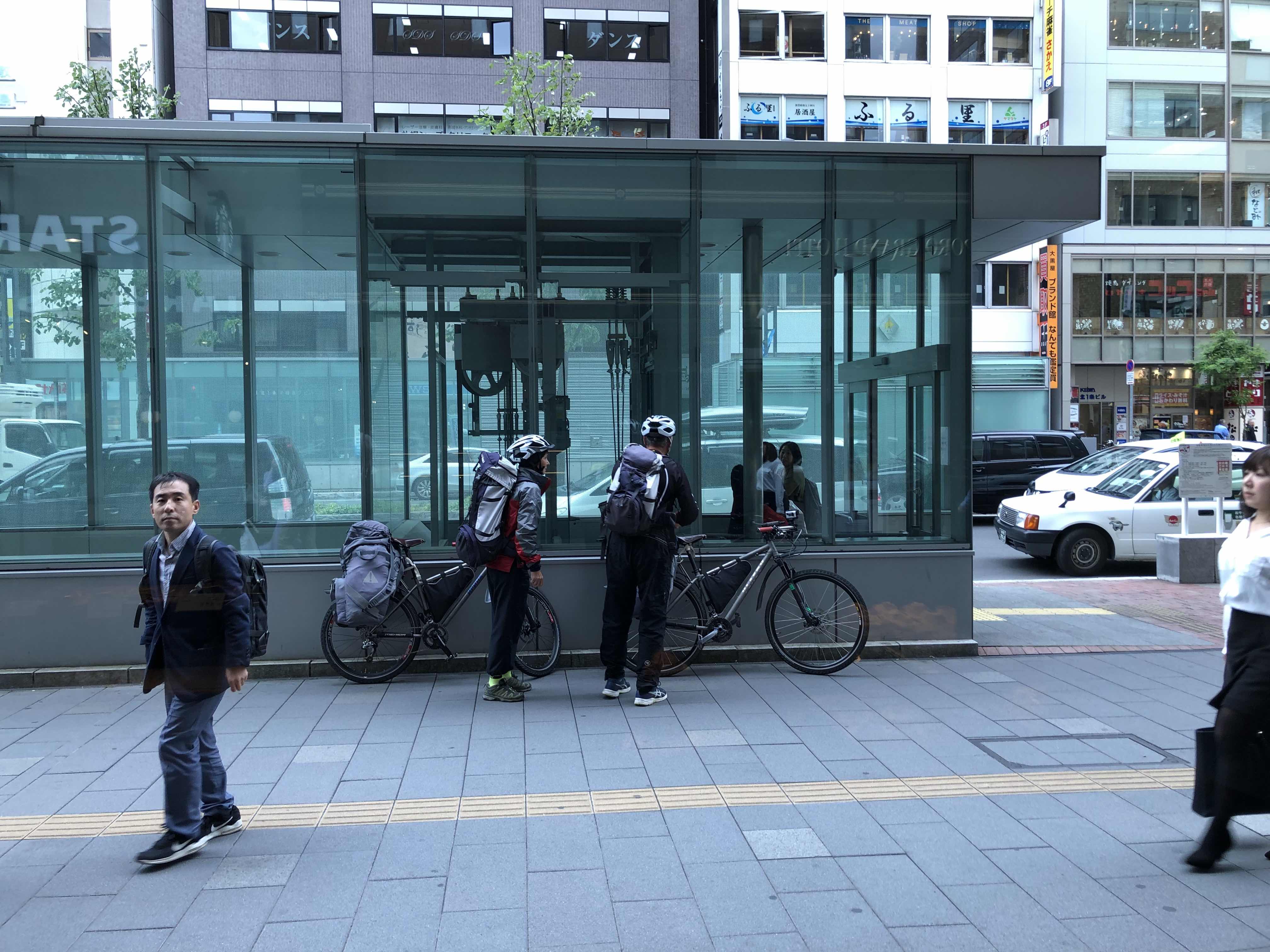
On my way into town this morning I saw another foreigner waiting for the bus, just like me. He had a friendly face so I said hi and how are you? We quickly realised we were both cycle enthusiasts having spent a similar amount of time in Hokkaido. He was from Quebec and has been doing bike tours every year for the last 7 years since hitting retirement: http://alainricard.blogspot.ca/ We spent a few hours checking out the castle and talking about the meaning of life (no conclusions reached), life choices and how important it is to enjoy life now, as opposed to “saving up for retirement” to enjoy life then. We talked a lot about journeys and what they mean and how cycling and travelling adds to life in general, about making choices, being and staying uncomfortable, discovering new things and meeting new people. We were in broad agreement. He also said he gives talks in Quebec on his travels, as there is always an audience that wants to explore cycling tours or just like to hear of others people adventures. I’ve done this too, 2x in an old people home back in 2009. I think I’ll do it again back home in London. 


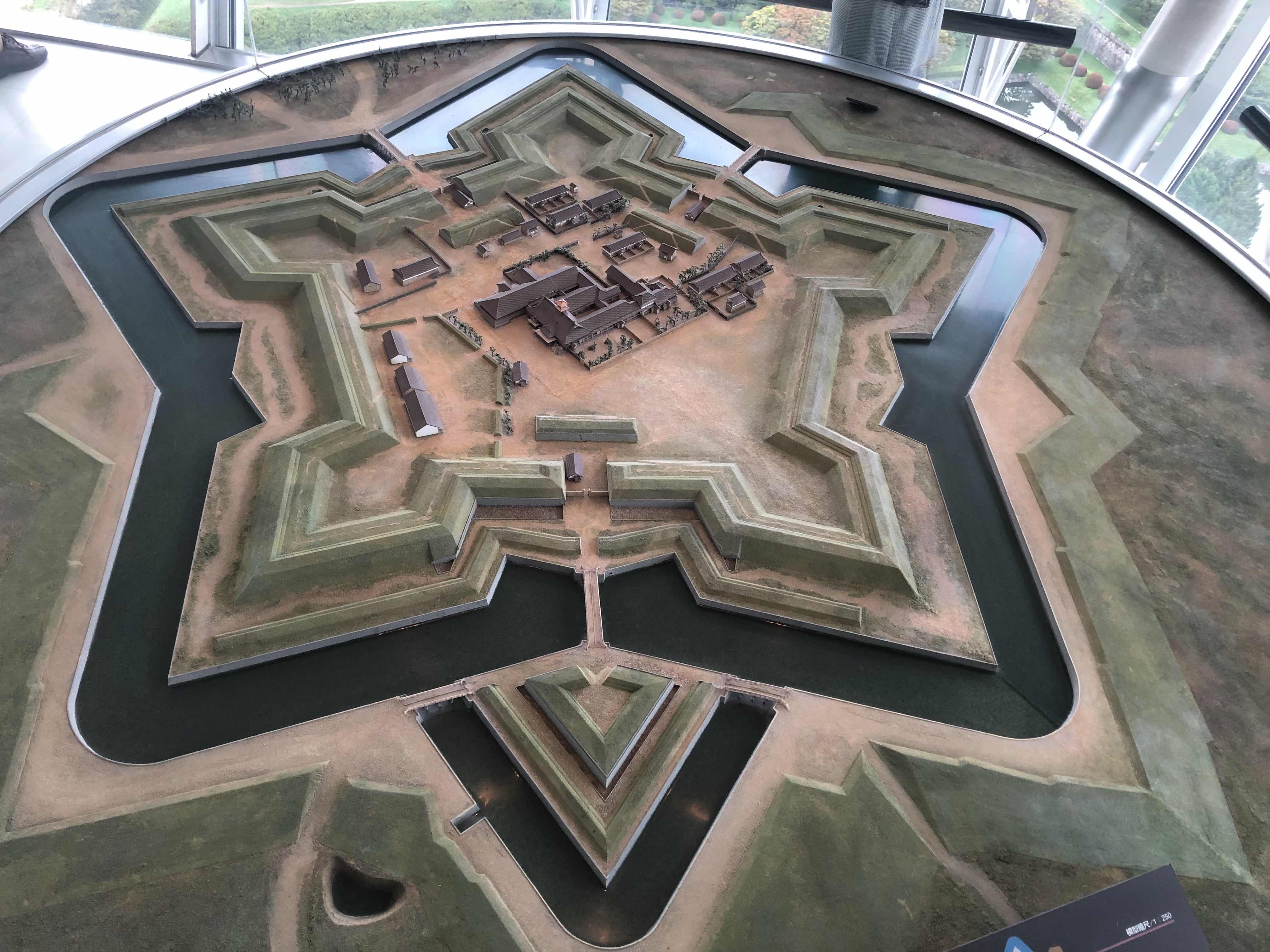
We checked out Goryukaku, a special place in Japanese history as it was here where the last remaining shogunate forces were beaten by the incoming Meiji government. There was a lot to learn in the castle about the history of it, the history of Japan and Hakodate itself. We also stumbled into a re-enactment of the fight scene of the last samurai. Good times 

Then, on our way out from the castle we saw this gentlemen (Japanese would probably refer to him as “Otaku”, meaning geek/nerd). With his “friend”, Nini, a girl puppet he had on his lap, sitting on a cloth. I asked if I could take a picture and he said sure. I asked his dolly how she was “Genki desu-ka, Nini? and he answered that “she’s fine”!


Then, we both saw a crow that had a nut in its beak. It flew over a road and waited for traffic to stop before throwing the nut into the air to drop it on the street. Intelligent crow I thought at first. But then, why not drop it somewhere with no cars so you don’t get run over. I had seen many sea urchins (the black, spiney balls) and clams being opened by sea birds 🦅 letting them fall on concrete so their shells crack. Nope, this crow had a different technique. The nut didn’t crack, it was way too hard (Japanese chestnuts have 4 chambers, not just 2 like in Europe and are much more sturdy). I was like haahaa, silly crow. Only for the traffic light to turn green again and for cars to zoom down. On car drive over the nut, and cracked it. The crow patiently sat on its power cable waiting for traffic to subside and to enjoy its nut. Wow, intelligent crow after all


It’s time to go to Shin-Hakodate, the Shinkansen terminal. From here a 4h ride to Tokyo (Ueno) and then. 40min ride to Kashiwa, home for the next few weeks as I pursue my martial arts activities. I’ll also be back at work, being able to work remotely and focusing on “going big” with our charity Hatch. It’s good to be able to work here as I’m generally 8h ahead and can can things done whilst London still sleeps...

There’s a typhoon sweeping the country, again, and I hope it won’t be too bad like the last one. I know one airport is closed and some trains will stop running but I also know it will be ok. 

Thanks Hokkaido, I’m sad to leave today, back to Tokyo...by Shinkansen.